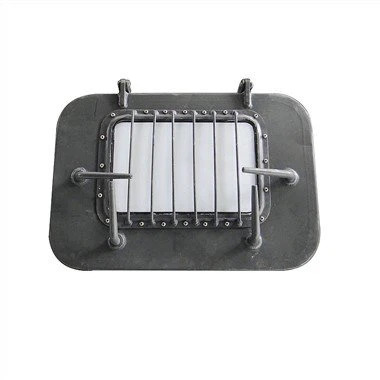
Трюмный насос: необходимый насос для лодки
Feb 22, 2022
Трюмные насосынаиболее важны для корабля, потому что они удерживают лодку на плаву. Существует два основных типа:центробежныйа такжедиафрагма.
Центробежные насосыиспользуют крыльчатки и обычно имеют электрический или механический привод. Они зависят от источника электроэнергии или прямой механической энергии, например, от двигателя или вала генератора. При установке электрических насосов подключение проводки имеет решающее значение. Соединения должны быть водонепроницаемыми и надежно закреплены в максимально возможной степени, чтобы предотвратить помехи насосу и/или поплавковому выключателю.
Some electric marine pumps include an internal float switch which, of course, activates the pump when water rises. These are usually smaller pumps, and the internal switch design can render them more susceptible to blockage and sticking due to bilge debris. Most bilge pumps require a separate float switch allowing easy testing of the switch and pump (manually lifting the switch arm) and separate installation positions for the switch and pump. For example; wisdom holds that two pumps may be better than one. Both pumps can be strategically located in the bilge, but the switch for one pump can be higher than the other. This allows automatic operation of only one pump for regular duty, thereby reducing current draw and the life of only the one pump. As any long time boater knows, emergencies happen. When water intake exceeds the capabilities of the primary pump, the higher switch will activate the back-up pump.
There are many type of centrifugal pump can meet the requirement. vertical pump( CLH, CLZ, CQX ) horitontal pump (CWZ, CWL, CIS) etc.
For smaller boats or those without power such as sailboats, rowing boats, etc., a manual suction or тип диафрагмыработает хорошо. Эти насосы могут быть недорогими и портативными. У них также есть то преимущество, что они не могут быть легко заблокированы мусором в трюме. Они надежны и прекрасно работают до тех пор, пока вы можете их запитать. Проблема в том, что на больших лодках как долго вы можете управлять насосами? Хотя эти насосы также могут приводиться в действие механически или электрически, они обычно больше и тяжелее, поэтому обычно выбирают центробежные насосы; но варианты хорошие. Если применимо, рассмотрите оба типа.
This brings us to another point. When purchasing pumps, do not skimp; as important as life jackets, rafts, ELT's and VHF's can be in an emergency, the good bilge pump is often your first line of defense against losing a boat and sometimes more. At the very least, in a flooding situation, good pumps can buy you time for options.
It is important to understand that advertised marine pump ratings in gallons per hour (GPH) are not accurate for normal use. Pumps are tested and rated in laboratory conditions with short outflow pipes on the horizontal. Under actual conditions we have to consider "head" which means overcoming both the friction of the outflow tubing and gravity to raise the water to the through-hull fitting. Common bilge pump tubing is a corrugated design which creates a great deal of friction. Smooth bore tubing is more expensive, but better.
Also, consider friction loss as outflow is restricted at the smaller diameter through-hull fitting. Now we have to lift the water from the bilge to overboard, usually through a through-hull fitting. Holes in a boat near the water line are to be avoided as much as possible. The through-hulls for your pumps should be at least eight inches above the waterline. For mono hull sailors, don't forget you're going to heel. For small boaters or commercial applications, remember that the water line will be higher if you heavily load the boat. You should always use a "safety loop" when piping overboard. That is, the piping should be looped higher than the through-hull to prevent water coming in if the through-hull is submerged. This loop, of course, increases the head, so it must be considered when choosing a pump.